 Paw Training Lab
Outdoors Dogs
Start loose-lead practice before the busy pavement
Build a simple movement-and-reward pattern in an environment where your dog can learn.
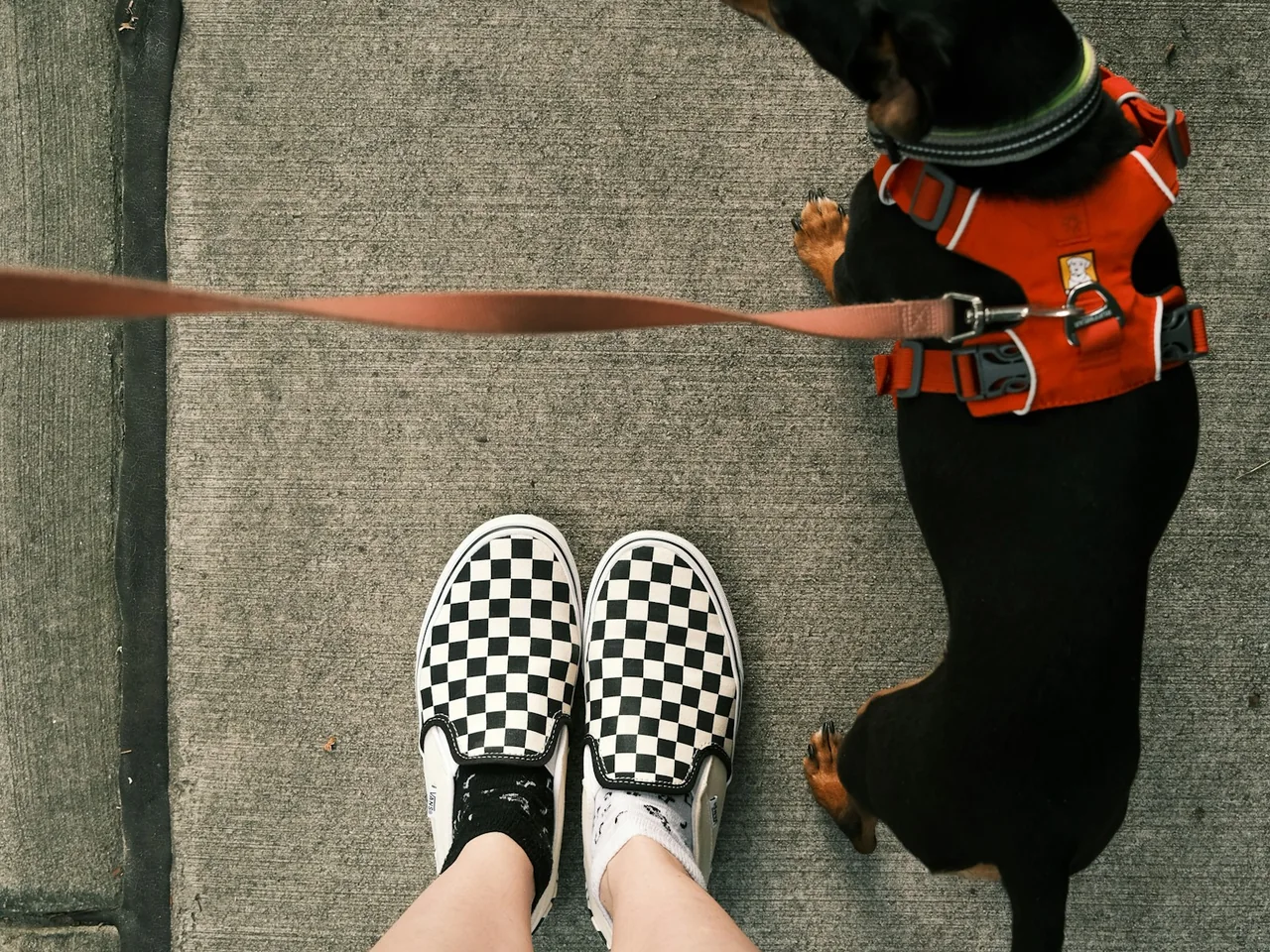
Context photograph.
Separate learning from getting somewhere
A walk to a destination can create pressure to keep moving even when the training setup is too difficult. Set aside an easier practice opportunity in a quiet place. Begin with appropriate, correctly fitted equipment and rewards ready to deliver.
Dogs Trust recommends reward-based loose-lead training and advises against jerking the lead. The equipment helps you manage the walk, but the learning comes from a clear pattern that the dog can repeat.
Practise a manageable pattern
- Start when the dog can notice you and there is room to move.
- Reward being near you with the lead loose, using a position you can deliver consistently.
- Move only a manageable amount before rewarding again.
- If the situation becomes too difficult, pause and reduce the challenge rather than adding force.
Diagnose the setup, not the character
Write what changed before pulling began: a busier route, greater distance from the reward, a different handler or an interesting smell. Those are practical variables. “Does not respect me” is an interpretation that does not tell you how to arrange the next repetition.
Keep training opportunities distinct from necessary outings when you can. On an ordinary outing, use sensible management and avoid expecting a newly learned pattern to hold through every distraction. A qualified trainer can help you adapt the plan to real routes.
Progress one dimension at a time
You might practise the same movement in another quiet spot before adding a busier environment. Do not simultaneously increase duration, distraction and distance. The log should identify what stayed familiar and what changed.
Check equipment for wear and follow fitting instructions as part of the routine. This guide does not recommend a specific product or claim that a harness alone prevents pulling. The objective is a clear, kind learning opportunity supported by suitable management.
Sources & practical application
These principles inform the guide. Household worksheets, examples and sequencing are our editorial application, not reported experiments or endorsements by the source organisations.
Source principle: Practise in quiet settings, reward proximity, and avoid jerking the lead.
Source principle: Choose a fit that allows movement; introduce the equipment and clips gently and inspect wear.
Checked October 16, 2026. How we prepare guides · Report a correction.